

How can employees be encouraged to adopt more sustainable behaviour without coercion, instructions or regulations? Nudging shows that it is often small changes in everyday life and the working environment that have a big impact and can be achieved through changes in behaviour. Sustainability within the company. The approach uses findings from behavioural economics to make sustainable action simpler, more attractive and self-evident. The aim is to ensure that sustainable options are also the most obvious and are therefore chosen as automatically as possible.
In this article, you will learn what nudging means, how it works, what types of nudges there are and how you can use them specifically to achieve greater sustainability in the company and sustainable behaviour among employees.
In this article you will find the following:
- Nudging explained simply
- The philosophy of nudging
- The different types of nudging
- Green nudging, social nudging - the subtle differences in sustainable nudging
- Examples of green nudging
- Examples of social nudging
- Understanding nudging and applying it yourself as a team challenge
- Conclusion: Small changes, big impact
- Extra: Nudging for lazy readers explained in a video (Deutsche Welle)
What is nudging?
We all know it from our own everyday lives: people rarely act purely rationally or weigh up all options for action in detail. We often make decisions automatically, for example out of habit, convenience or social conformity. As humans, we do not have all the information at our disposal, nor do we weigh it up anew each time. Instead, we fall back on repeated decision paths. This is a kind of energy-saving mode of the brain that creates security and reduces effort. This has been proven by numerous empirical studies in behavioural economics.
Nudging means encouraging people to make better decisions without patronising them. Instead of coercion or financial incentives, the environment in which decisions are made, i.e. the so-called decision architecture, is changed. This makes sustainable behaviour in the company and the immediate working environment an easier or obvious option.
Through the lens of behavioural patterns and automatisms, it is possible to identify where unsustainable behaviour is encouraged and where sustainable action is hindered. The nudging approach can then be used to change behaviour.
A nudge in a company can therefore be the creation of a decision template, a workspace or a process. Later in this article, we will also look at specific examples of nudges.
Particularly promising are nudges when they are perceived positively, can be implemented voluntarily and are transparent. It is crucial that employees understand why they are doing something - not that they are pressurised into doing it. So they will motivates for more sustainability in the company.
Philosophical approach behind the concept
The concept of nudging was popularised by Richard Thaler and Cass Sunstein (2008). They showed that people rarely fully consider all information before acting or making decisions. Instead, they follow established thought patterns or obvious options. This is a mechanism that provides relief in everyday life, but can also lead to unsustainable routines.
For the philosophical gourmets among the readers here: Nudging can be described as liberalistic paternalism - or paternalistic liberalism - to describe it. People should be persuaded to make better decisions, which is paternalistic, and yet we retain free choice, which follows the liberal ideal.
Sustainable behaviour through nudging - the different types of nudging
If you understand the basic principles regarding structure and information provision, you can identify new and suitable nudging ideas within the company itself. The most important types are

Decision information
Information is prepared in such a way that it is understandable and emotionally appealing, for example through visual symbols, CO₂ traffic lights, feedback on water consumption or short reminders („This action saves energy for three cups of coffee“).
Decision-making structures
The standard option (default) is changed here, e.g. double-sided printing, pre-set sustainable products or automatic switch-off of devices after work. Users often stick with the preset option.
Social comparisons
People orientate themselves towards others. If it is made visible that a team, a peer group or location is acting in a particularly energy-saving or health-promoting way, healthy competition is created.
Decision support
Simple feedback or reminders help to maintain desired actions. These include light-off reminders when you leave the office or pop-up reminders to take an active break.
Gamification
Playful elements (e.g. challenges or rankings) motivate through fun, rewards and comparability and can be incorporated for nudges. Following a desired action, positive feedback is then given, e.g. applause, a winning melody or a pop-up with a thank-you message. You can find a detailed article on the methodology of gamification linked here.
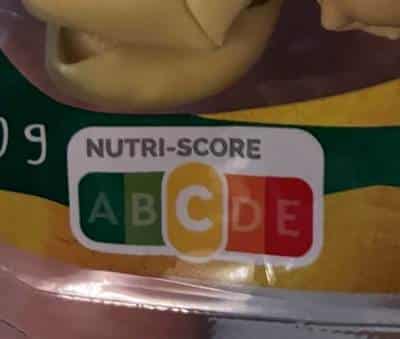
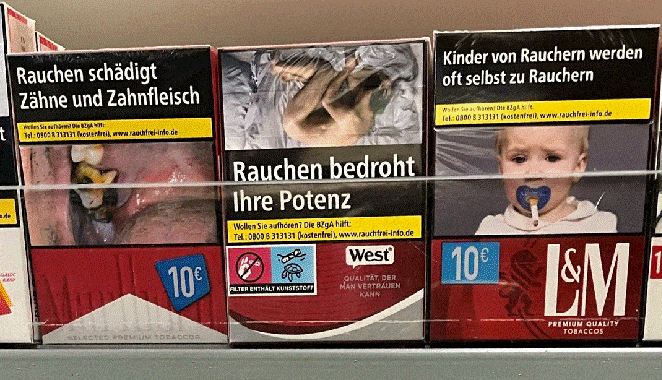

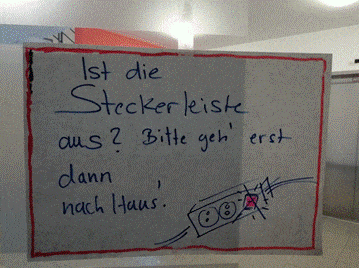
Why this overview is valuable: If you know the types, you can combine nudges in a targeted way or adapt them to your organisation. This encourages creativity, participation and a shared understanding of how sustainable behaviour can emerge.
Green nudging, social nudging and sustainable nudging
Nudging can be translated as prodding. When one speaks of Green nudging often refers to a nudge towards sustainable behaviour. Strictly speaking, „green“ is initially only about environmentally friendly behaviour. However, sustainability encompasses several dimensions: Environmental, social and economic or governance.
Nudges can therefore also be designed with social sustainability in mind. This is the case, for example, when nudges contribute to health, social interaction, education, helpfulness, etc. In this case, we would speak of social nudges. Strictly speaking, we would then speak of social nudges.
Since sustainability encompasses the dimensions of environment, social and economy or governance (ESG), it would therefore be too short-sighted to translate „green nudges“ unspecifically as „nudges towards sustainability“.
Examples of green nudging
Green nudging means adapting people's environment or workplace in such a way that they automatically act in a more environmentally friendly way without actively thinking about it. This promotes ecologically sustainable behaviour.
Simple examples of nudging in the company are
- Set standard pressure setting: Double-sided printing on recycled paper
- Water taps: If the basic setting is on cool instead of in the centre (between cold and warm), people use cooler water on average; an irrelevant difference for washing hands, but for the heating bill.
- Covered bicycle parking spaces offer a storage facility for cycle helmets directly in front of the entrance to make cycling a simple and attractive environmentally friendly alternative
- in the company canteen Place organic fruit and fair trade products at hand height
- the selection in the Mobility pool is preset by default to electric car instead of combustion engine
- Used machines and office equipment (monitors, dishwashers, etc.) have the standard programme Eco or energy-saving mode activated
- Notes before training courses such as „For the sake of the environment, the lecturer recommends that you use the documents in digital form during the seminar.“
- Routes in logisticsk or business trips are optimised for energy or fuel consumption, other options remain possible and can be selected
- at the Shopping in the online shop automatically set the filter to sustainability criteria such as refurbished, renewable materials, recyclable, etc.
This shows that green nudging is particularly effective where people Everyday decisions meet. It is less about major investments in buildings or supply chains and more about behaviour in the office, mobility, consumption or health.
Examples of social nudging
We have already highlighted the difference between nudging and specific green nudging. Social nudging is about changing the sustainable behaviour of employees in terms of the social dimension.
- Sports challenges (e.g. using a pedometer) for staying fit in everyday working life
- Covered bicycle parking spaces directly at the entrance and Shower facilities promote exercise and thus the health of employees
- Selection of Job benefits: There is a selection of goodies that benefit your own work team
- in the company canteen healthier food is presented, e.g. fruit compared to the classic dessert for dessert
- Automatic allocation of alternating Lunch partners or (Online) coffee rounds, which strengthen the exchange and cooperation across departmental boundaries
- when shopping in the company's online shop, automatically set the filter to sustainability criteria such as Fairtrade, manufactured in an inclusive company or family-friendly company, etc.
The examples show that nudges can often be environmentally friendly and socially responsible at the same time. They can also go hand in hand with good governance - so we have addressed all ESG dimensions.
Understanding nudges and developing sustainable nudges yourself as a team task
Sustainability nudges are particularly effective when they are developed together. The fascinating thing is that the concept of behavioural change also works when those involved know that they are to be nudged in a certain direction. This creates transparency and employees can take a self-critical look at their working environment to see where sustainability is being promoted or hindered.
The procedure for developing nudges in the team could be as follows, for example: The participants are sensitised by the team leader with a mini training session on the topic of nudging. They are briefly familiarised with how it works, the types and some generic examples. Then, for a certain period of time (e.g. during an action week or in the course of an employee day), sustainable and non-sustainable nudges are searched for in each department, on the company premises or along processes. This can be documented briefly using a smartphone photo and a note sent to the team leader. At the end of the campaign period, the nudges are collected, discussed and new nudges can be implemented directly in the working environment, for example by introducing standard default settings, putting up appropriate information boards or redesigning the working environment or company premises.

Experience shows that such formats have an activating effect, allow teams to take a fresh look at their day-to-day work and question ingrained patterns of behaviour. They therefore contribute to contribute to a tangible corporate culture that takes sustainability seriously as a value and promotes it.
The page green-nudging.de provides a jointly developed Guide to the development and application of nudges, including checklists and worksheets.
Conclusion: Achieving sustainable behaviour with small changes and a big impact
Nudging can make sustainable behaviour simple and the norm. This brings benefits for the environment, health and/or cooperation within the company - through clever structures, tips and decision support.
Sustainable nudging is a conscious design of the environment, work processes and decision-making architecture.
Once you understand how nudges work, you can use them in your own company - from the canteen to IT, production, purchasing and HR. With the knowledge gained from this article, you will not only know what nudges are, but also how you can design and implement them - even as a fun and interactive team event.
More on the topics in this article in our blog:
- Sustainable corporate culture: how to use it to your advantage...
- Motivating employees for sustainability in the company - these 5 basics are essential!
- Why does climate-friendly behaviour fail in everyday life and at work? - Interview with psychologist Prof. Thomas Brudermann
Further external links:
- Thaler & Sunstein (2008): Nudge - Improving Decisions about Health, Wealth and Happiness
- Green-Nudging.de - What is green nudging? As well asGuide to the development and application of nudgesincl. checklists and worksheets. This gives you a step-by-step guide to going through the process
- the Deutsche Welle explains nudging - Video „dhe gentle push"



[...] and where sustainable behaviour is hindered. The “green nudging” approach can then be used to change behaviour. Green nudging means that the environment or workplace of the [...]