

Sustainability has long been an integral part of Strategic topic. Gamification in companies can help to promote sustainability. Even if goals, mission statements and action plans exist, less often happens in everyday life than management and sustainability officers would like. Employees know „in theory“ what would be important, but routines, time pressure and habits slow down implementation.
This is exactly where gamification comes in. In this article, we explain what gamification means in the corporate context, which effects have been proven in studies and practice in the field of sustainability and which gamification approaches are particularly suitable for sensitising, activating and motivating employees. Sustainability strategies to life.
Contents
- What does gamification mean in the context of companies?
- Why can gamification promote sustainability in a company?
- What can gamification achieve in a company in terms of sustainability?
- What opportunities and risks does gamification harbour for companies?
- How can gamification be implemented for more sustainability in the company?
- Gamification for more sustainability in the company: A step-by-step guide
- Our plant values practical example: „Using gamification for digital data cleaning“
- Conclusion: When sustainability becomes a shared game through gamification in the company
What does gamification mean in the context of companies?
By gamification in the company for more sustainability, we mean the use of game elements in everyday working life to make sustainable behaviour more attractive, visible and effective. It's not about turning the company into a playground, but about shaping change in such a way that people enjoy taking part. Voluntarily, motivated and with a clear goal in mind. You can also find out more about motivating employees in our blog article.
Gamification therefore describes the use of typical game elements in a „non-game“ environment. Instead of developing a complete game, individual game mechanics are used. The aim: desired behaviour is rewarded, made visible and emotionally charged. For companies, this means designing processes, campaigns and workshops in such a way that employees not only understand sustainability, but actively experience it.
This makes gamification in the company a building block of targeted change management and strategic cultural development - not a detached game action - and thus part of the sustainability transformation (Click here for our guide to sustainability transformation in companies).

Do you want to classify your sustainability topic?
Whether it's strategy, reporting, CO₂ balance, funding, or implementation: we'll help you sort through your questions and find the next useful step.
Your contact person: Matthias Damert
Sustainability Analyst and Climate Protection Expert
Why can gamification promote sustainability in a company?
In order for gamification to effectively support the transformation towards greater sustainability in a company, it is worth taking a look at the psychological mechanisms behind it. Many studies draw on well-known motivation models (e.g. self-determination theory, behavioural research) and show a positive effect of gamification.
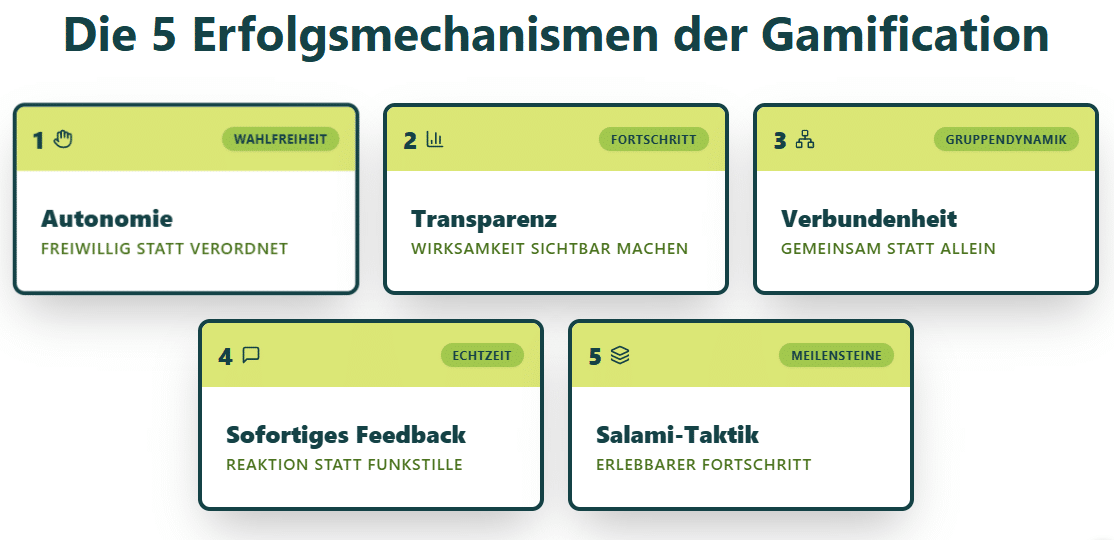
1. autonomy: voluntary instead of prescribed
People are more motivated when they have the feeling that they can make their own decisions. Good gamification approaches in the corporate context therefore focus on voluntariness and choice, e.g. through the following elements:
- Teams select the most suitable from several sustainability campaigns
- Employees can set their own goals or make suggestions
- There are „opt-in“ formats instead of mandatory tasks
This creates the feeling: „I'm taking part because I think it makes sense“ - and not because the company is „prescribing“ something.
2. transparency: making effectiveness visible
Sustainability in the corporate context often seems abstract: whether someone comes by bike today or eats vegetarian in a fortnight' time seems to make little difference in the big picture. Gamification makes progress visible, e.g. through the following elements:
- A dashboard shows how much CO₂ a team has saved in a challenge
- Progress bars show how close an area is to its common goal
- Badges recognise individual contributions (e.g. „Energy saver of the week“)
Employees experience this: „My behaviour has an effect and I can see it immediately.“
3. connectedness: together instead of alone
Many gamified sustainability projects create positive group dynamics:
- Teams motivate each other
- Small challenges are created between locations or departments
- Celebrating successes together
This social component helps to understand sustainability as a joint task for the organisation - not as an additional individual task.
4. immediate feedback: reaction instead of radio silence
In traditional sustainability programmes, there are often months between a measure and reporting. Gamification shortens this time gap, e.g. through the following elements:
- Every action immediately triggers points, progress or feedback
- Employees receive feedback in real time, not just in the annual report
This immediate feedback is a decisive factor in bringing about lasting changes in behaviour.
5. salami tactics: tangible progress despite major tasks
Gamification for more sustainability in the company works particularly well when the „big goal“ (e.g. climate neutrality, resource conservation, sustainable mobility) is translated into smaller stages, e.g. through the following elements:
- Campaigns with monthly targets
- Milestones per area
- Clear milestones
In this way, large strategies are translated into small, feasible steps - and that is motivating.
Methods and best practice on sustainability delivered straight to your inbox.
Our news bulletin provides concise insights on strategy, reporting, transformation, and implementation.

What can gamification achieve in a company in terms of sustainability?
The scientific literature and practical projects give a relatively clear picture: well-designed gamification approaches can noticeably promote sustainable behaviour in the corporate context.
More sustainable behaviour in everyday working life
Experiments with gamified apps or platforms show, among other things:
- Employees who take part in gamification formats use sustainable mobility options more frequently (cycling, public transport, carpooling)
- In office buildings, energy consumption can be reduced if employees are encouraged to switch off appliances or heat their homes economically through play
- Waste separation and waste avoidance improve when they become part of clear challenges
The effects naturally depend on the industry, starting point and design. The decisive factor here is that behaviour usually changes measurably through gamification, precisely where traditional information campaigns often reach their limits.
Higher commitment than with pure information transfer
Several studies compare gamified formats with purely informative approaches (e.g. e-learning, posters, emails). The pattern that emerges here is:
- Gamification leads to higher participation among employees
- Employees can remember content better
- Employees rate playful formats as more relevant and motivating
For companies, this means that if you are already investing time and budget in sustainability communication, gamification can help you utilise these resources more effectively.
More identification with sustainability issues
It has also been shown that narrative elements, e.g. a shared „mission“, a future scenario or a fictional story, significantly increase identification with sustainability issues. Instead of abstract goals („Reduce CO₂ emissions by 30 %“), the focus is then on a narrative, e.g:
- „We will make our site the most climate-friendly in our industry by 2030.“
- „Our team takes on the role of ‚climate team‘ and tests new solutions for everyone.“
Such storylines can be combined well with gamification and make sustainability more emotionally tangible.

What opportunities and risks does gamification harbour for companies?
As with every instrument in the transformation process, there are clear strengths and points that you should pay attention to.
Advantages and opportunities
More participation instead of „tough communication“
Gamification formats often achieve a significantly higher participation rate than traditional mailings or information events.
Sustainability becomes concrete and tangible
Employees see the impact of their behaviour and can immediately track successes.
Strengthening team spirit and culture
Joint challenges and missions promote collaboration and exchange between divisions.
Better data and transparency
Gamified systems provide data: Which measures work? Where is there little response? You can learn from this.
Connectivity to existing programmes
Gamification can be linked to existing sustainability activities, health programmes or innovation formats.
Disadvantages and risks
Gamification is no substitute for a strategy
Without clear goals, responsibilities and governance, even the best gamification approach for greater sustainability remains piecemeal.
Danger of purely extrinsic motivation
If the focus is only on points and prizes, the motivation for sustainable behaviour in the company often disappears as soon as the campaign ends. Meaning, values and participation must also be considered.
Poor design can be demotivating
Unclear rules, non-transparent evaluations or perceived injustice can cost trust.
Data protection and monitoring
If employees have the feeling that they are being monitored, the effect is negative. Transparency and voluntariness are crucial here.
Surveys of employees who take part in gamification projects repeatedly reveal similar points that you should also pay attention to:
- The format should be voluntary
- It should be fun, but not childish or too playful
- Transparency, fairness and data protection are important
- Rewards must fit the company and the culture (recognition vs. material prizes)
You should definitely take these points into account when designing your own gamification approaches.
How can gamification be implemented for more sustainability in the company?
Gamification approaches for more sustainability in the company can look very different. In the following, we present common approaches - focussing on what they are suitable for, for whom they are worthwhile and what results can typically be achieved.
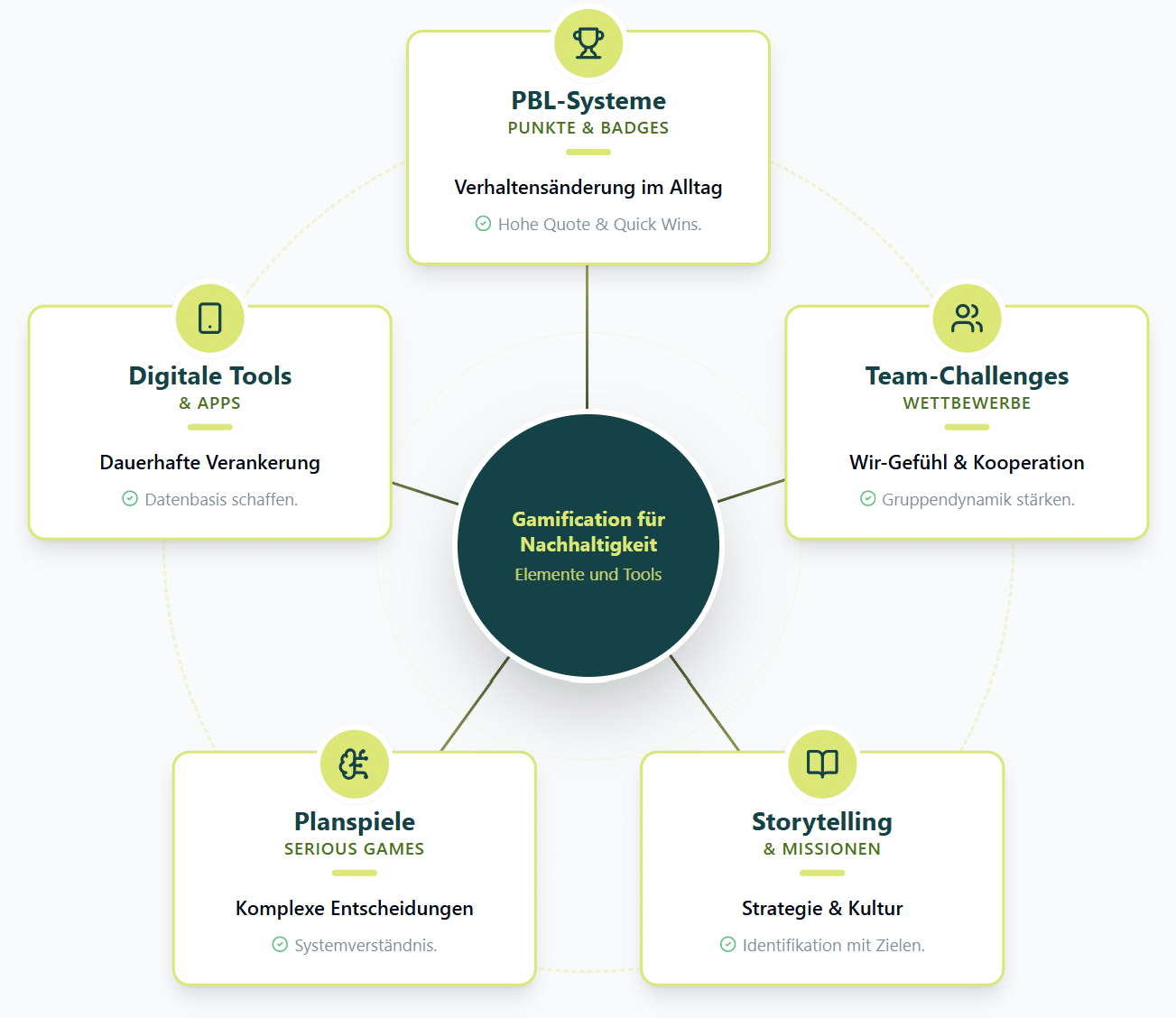
Points, Badges & Leaderboards (PBL systems)
What is it suitable for?
- Saving energy in the office (lighting, appliances, heating)
- Waste reduction and waste separation
- Sustainable mobility in everyday life (e.g. travelling to work)
- Resource-conserving use of materials
Who is it particularly suitable for?
- Companies that want to involve broad sections of the workforce
- Several locations or departments that are comparable
- Organisations that already collect key figures (e.g. energy consumption)
Possible results:
- Noticeably higher participation rate in sustainability campaigns
- Short-term behavioural changes (e.g. switching off lights, recycling)
- first steps in the direction of data-based Sustainability controlling
It is important not to design points and rankings as a purely competitive system, but to frame the results in a positive way („celebrate progress together“ instead of „expose the losers“).
Team challenges and interdepartmental competitions
Here, teams, departments or locations compete against each other in a friendly competition, for example as part of a „Mobility Week“ or a „Sustainability Month“.
What is it suitable for?
- Temporary campaigns (4-8 weeks)
- specific topics such as mobility, energy, nutrition or waste
- Kick-off of major sustainability programmes
Who is it particularly suitable for?
- Companies with multiple teams or locations
- Organisations that want to strengthen team spirit
- Employees with different roles and functions
Possible results:
- Strong group dynamics and mutual motivation
- New routines (e.g. more cycling, less disposable packaging)
- Increased visibility of sustainability in everyday corporate life
Team challenges are also a good starting point for building up longer-term gamified programmes later on.
Storytelling and mission design in workshops and change processes
Gamification elements can be combined well with storytelling in strategy workshops, management formats or change processes. Participants then work on missions („Design your roadmap to 2030“), for example, collect insights and solve tasks together.
What is it suitable for?
- Development and communication of a Sustainability strategy
- Vision workshops and goal-setting processes
- Cultural work („What does sustainability mean for us as a team?“)
Who is it particularly suitable for?
- Management, executives, project teams
- Sustainability committees, steering committees
Possible results:
- Deeper understanding of the strategic direction
- Greater identification with goals and measures
- More commitment to implementation („This is our mission“)
This is less about points and rankings and more about a A narrative that reflects the company and its employees.
Business games and simulations (serious games)
Simulation games depict complex decisions relating to sustainability as a game, for example:
- Investment decisions on climate-friendly technologies
- Conflicting objectives between the dimensions of sustainability (e.g. costs, emissions and social criteria)
- Different scenarios for market, regulation and climate impacts
What is it suitable for?
- Strategy meetings, management workshops
- Advising the Executive Board and supervisory bodies
- Sensitisation to systems, interactions and conflicting objectives
Who is it particularly suitable for?
- Top management, divisional management
- Sustainability and climate protection teams
Possible results:
- Better understanding of interdependencies
- higher quality decisions
- More realism in objectives and action planning
Simulation games are generally more time-consuming to prepare, but can trigger strong realisation and aha effects.
Digital tools & apps for continuous behavioural change
Digital platforms or apps are suitable for permanently anchoring gamification in the company's sustainability. Typical functions are
- Personal and team-related statistics
- Challenges and memories
- Integration into existing tools (e.g. intranet, collaboration platforms)
What is it suitable for?
- Long-term programmes on mobility, energy or resource use
- Distributed organisations (e.g. many locations, remote teams)
- Monitoring and reporting of sustainability KPIs
Who is it particularly suitable for?
- Medium-sized and large companies
- Organisations with a high level of digitalisation readiness
Possible results:
- Continuous behavioural changes instead of one-off campaigns
- Reliable database for reporting and further development
- Stronger link between sustainability goals and everyday behaviour
Careful coordination on the topics of data protection and co-determination is particularly important here.
Gamification for more sustainability in the company: A step-by-step guide
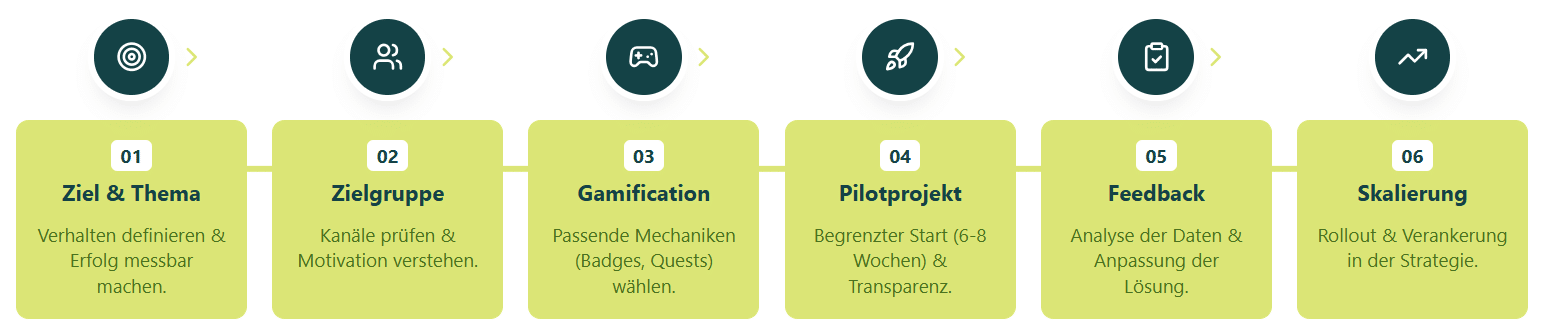
Finally, we would like to give you a compact step-by-step guide on how you can pragmatically approach gamification in corporate sustainability.
- Define goal and sustainability topic
What specific behaviour would you like to promote (e.g. climate-friendly mobility, energy saving, participation in workshops)?
How does this behaviour contribute to your sustainability strategy?
How do you want to measure your success (e.g. key figures, participation, feedback)? - Defining and understanding the target group
Who would you like to involve in the company (all employees, specific locations, managers)?
Which channels and formats are common for this target group (intranet, app, face-to-face workshops)?
What motivates your employees based on experience - competition, cooperation, recognition? - Select suitable gamification approaches
For simple behavioural changes in everyday life: points, badges, team challenges
For strategy and cultural discussions: Storytelling, mission design, business games
For long-term programmes: digital platforms or apps - Set up a pilot project
Start with a clearly defined pilot (e.g. one location, one department, one topic).
Set a clear time period (e.g. 6-8 weeks).
Communicate transparently what is being tested and why. - Obtain and evaluate feedback
Ask participants: What worked well? What did not?
Analyse key figures and participation.
Customise mechanics, communication and technical solutions. - Scaling and anchoring in the company
Transfer successful elements to other areas or locations.
Link the gamification format with existing structures (e.g. sustainability report, annual targets, internal communication).
Use the data and experience gained to further develop your sustainability strategy.
Our plant values practical example: „Using gamification for digital data cleaning“
We used gamification ourselves to make a rather tedious and often postponed internal task in the company fun and stimulating: digital tidying.
What did we do? For one evening, we spent around 2 hours, guided by a game leader, tidying up email inboxes together, clearing out old project folders, whiteboards that were no longer in use and much more.
Why? Because it frees up storage space in the cloud and we reduce our digital footprint by using less energy and server capacity. In addition, we were able to reminisce about old project memories and sensitise ourselves to the topic of data cleaning. There was also pizza and drinks for our physical well-being. We collected points with every clean-up activity and advanced a few steps on the game board. At the end, a winner was chosen and there were small prizes for hard work cleaning up. In the end, we were delighted with a successful team evening and many gigabytes of deleted data.
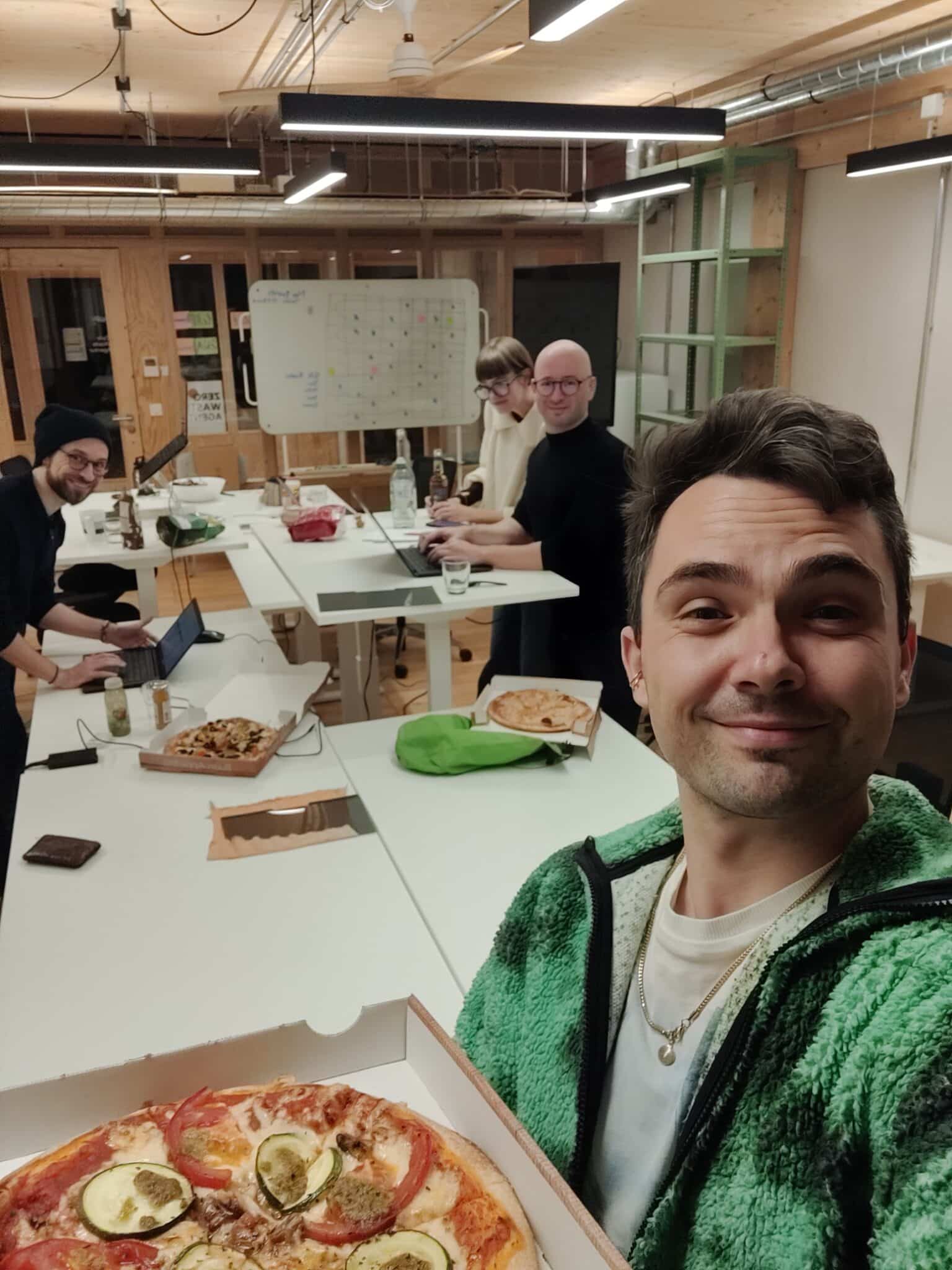
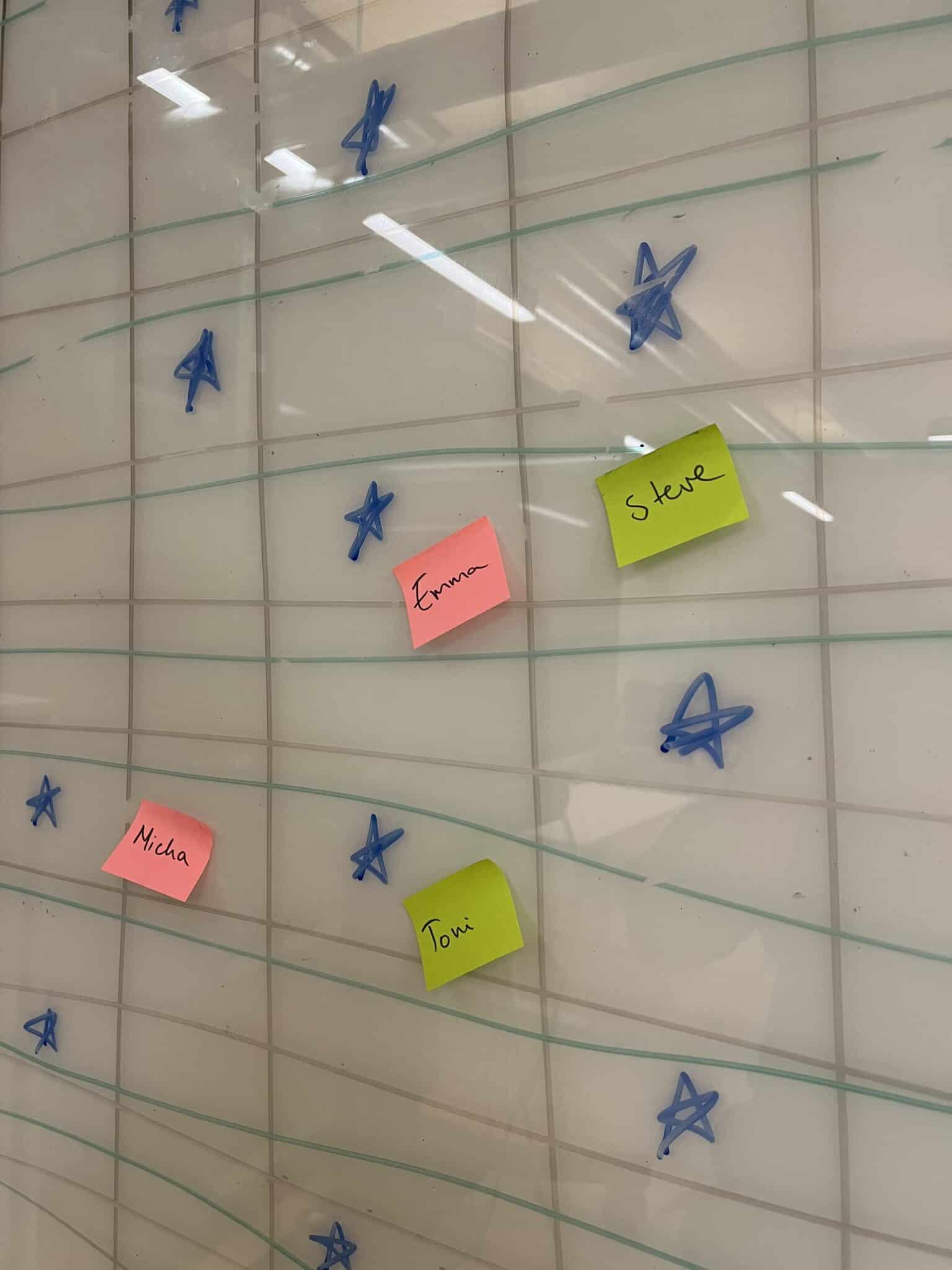
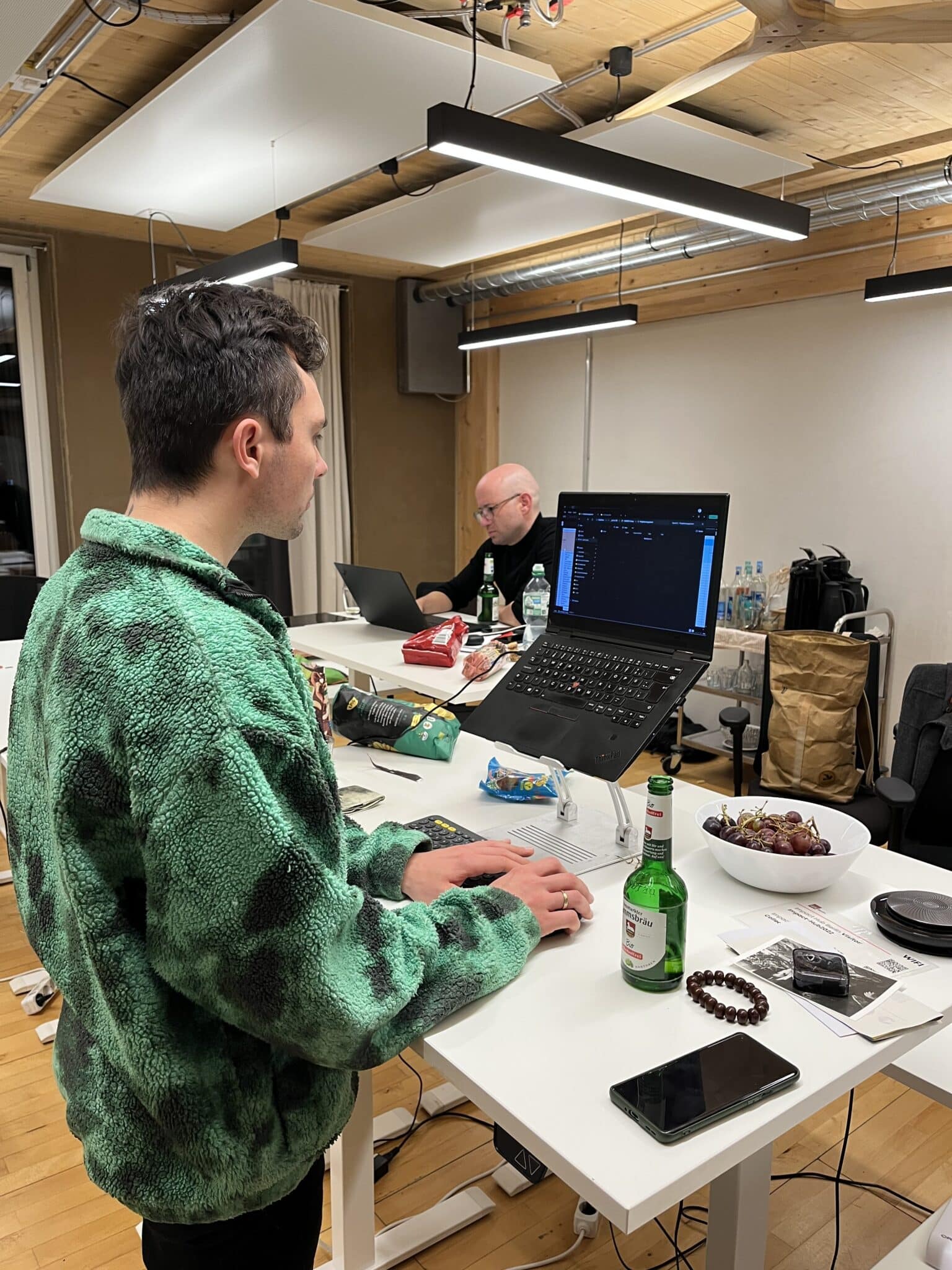
In response to popular demand, we have created the game instructions and are sharing them here for anyone interested to click through directly or download:
Conclusion: When sustainability becomes a shared game through gamification in the company
Gamification in companies for more sustainability is not a panacea, but it is a potentially very effective tool for translating sustainability strategies into practice. When used correctly, gamification helps to raise employee awareness, increase participation and anchor sustainable behaviour in everyday corporate life.
It is crucial to understand gamification in the context of sustainability not as a decorative add-on, but as a consciously designed component of change and cultural work in the company. If goals are clear, target groups are taken seriously and formats are carefully developed, gamification can achieve exactly what many sustainability projects lack: motivation, the joy of co-creation and tangible progress - playfully and step by step.


[GamificationPlayful elements (e.g. challenges or rankings) motivate through fun, rewards and comparability and can be incorporated for nudges. Following a desired action, positive feedback is then given, e.g. applause, a winning melody or a pop-up with a thank-you message. We have published a detailed article on the methodology of gamification. [...]